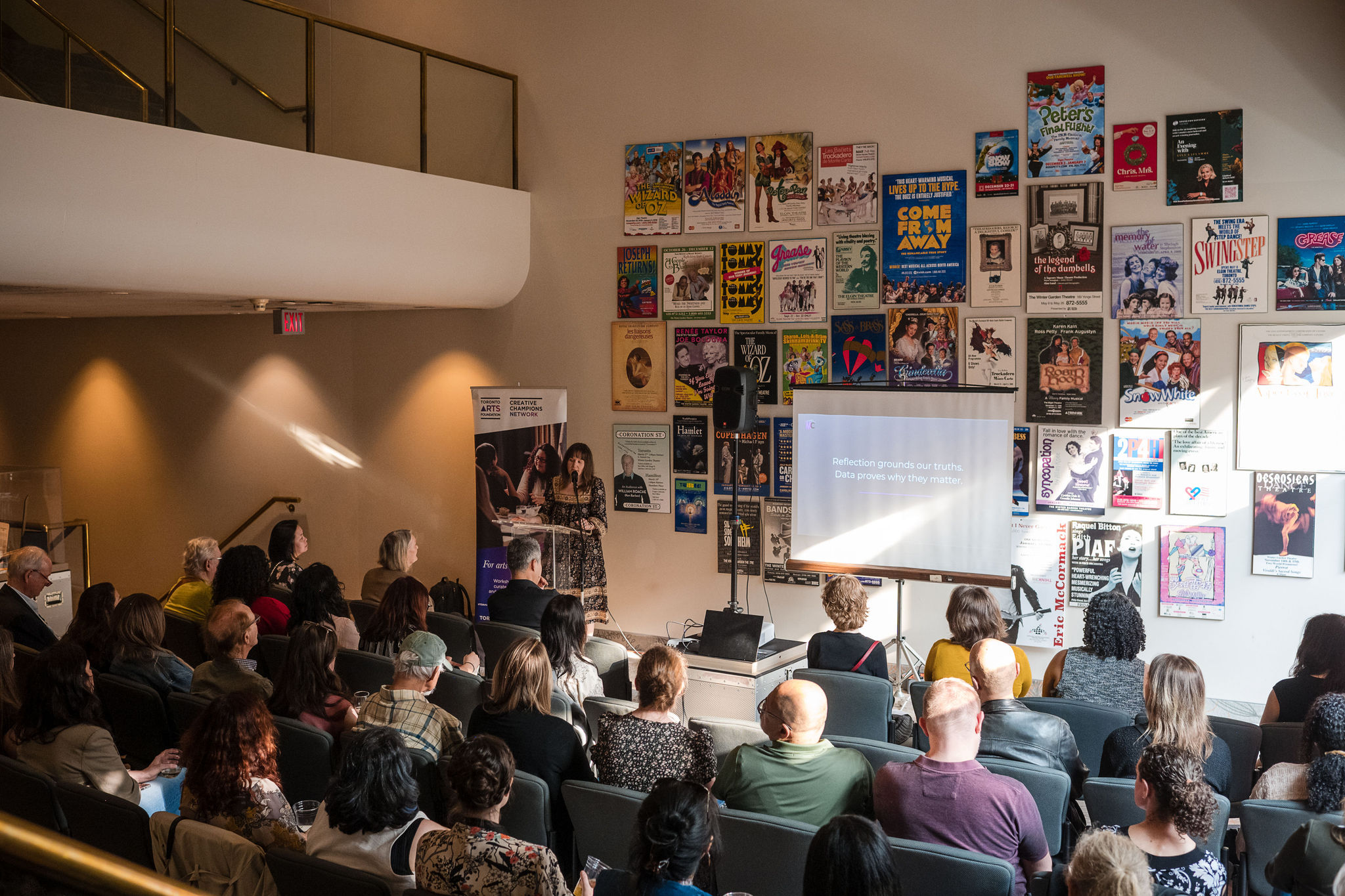
Mass Culture helps organizations tell their stories in an authentic way with data through interactive training events like these. Image credit: Mass Culture
Data literacy is lacking in many sectors across Canada, yet non-profit organizations rely on these skills to communicate their value to funders and build public support. Creative industry groups in particular often lack the capacity to measure data beyond economic return on investment, in part because of the intangible nature of many arts and culture outcomes. The non-profit Mass Culture has developed the Data Narratives for the Arts (DNA) initiative to support arts organizations in developing cultural indicators that illustrate their work and tell their stories in an authentic way – one that is supported by data.
Now in its third year, the DNA program has supported 30 organizations across the country through online workshops – delivered in partnership with non-profit consultancy Purpose Analytics – and tailored, one-on-one data training with a dedicated coach. These programs build participants’ confidence and help their organizations strengthen their ability to measure impact and communicate tangible outcomes to stakeholders and funders. A core part of the program’s approach is meeting organizations where they are to help them understand and make better use of the data they already have.
Mass Culture has also built a data-sharing platform with insights from 4,200 organizations across the country, allowing groups to compare themselves with their peers. Financial information forms the backbone of the dataset, but other indicators include staffing trends, community feedback, and partner engagement.
The DNA initiative is part of Mass Culture’s broader mission to create a knowledge-sharing network in the arts and culture sector, co-led by the arts organizations themselves. Participating organizations regularly document their work with learning log journals and ripple effect mapping, to trace successes and challenges at different points in the journey over a period of years. Mass Culture has built a culture of “training the trainers,” so groups can be ambassadors to others. Peer-to-peer knowledge sharing through the DNA Platform and an annual DNA Expo creates opportunities for organizations to learn from program participants about building surveys, measuring engagement, and working through setbacks. Mass Culture itself is committed to continuous learning and participates in a community of practice with other non-profits about data storytelling; this engagement has helped them to refine their own offering.

Interactive workshops bring arts and cultural organizations together for peer-to-peer knowledge sharing and professional development. Image credit: Mass Culture
The work would not be possible without strong and sustained support from funders, including the Ontario Trillium Foundation, the Ontario Arts Council, Canadian Heritage, the Canada Council for the Arts, the Azrieli Foundation, Calgary Arts Development, the City of Toronto, and the Metcalf Foundation. These form part of an advisory group known as DNA Core, which meets with Mass Culture regularly to provide guidance, work through challenges, and broker connections. A particularly important contributor to the program’s success was an initial funding runway of three years before needing to report tangible outcomes.
By transforming how organizations approach data – reframing it from an administrative reporting burden to a medium for understanding impact and telling meaningful stories – Mass Culture has strengthened the capacity of organizations in the arts and culture space across Canada. Its data training model has the potential to scale across geographies and to other sectors, contributing to a thriving ecosystem of non-profits.