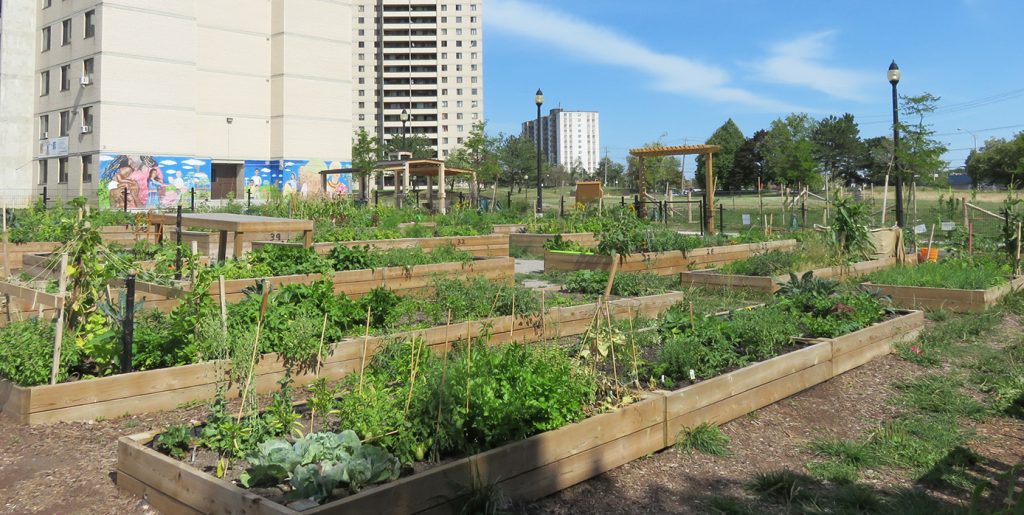
Black Creek SNAP transformed the aging San Romanoway Towers with a holistic improvement plan including building retrofits, green infrastructure, and a community garden. Image credit: TRCA
Bringing together expertise in watershed management, climate resilience, and community engagement, the Toronto and Region Conservation Authority (TRCA) formed the Sustainable Neighbourhood Action Program (SNAP) to improve the sustainability and resilience of older neighbourhoods in the GTA, given the challenges that many face in areas such as stormwater management, home retrofits, water use and conservation, energy, and natural heritage. By better connecting various stakeholder groups, the program encourages sharing knowledge, improving planning efficiencies, building implementation partnerships, and exploring opportunities for expanded impact. The result is accelerated progress toward solutions rooted in local priorities and conditions – place-based interventions focused on ensuring older urban neighbourhoods are resilient, sustainable, and vibrant. Since 2009, SNAP has revitalized 17 neighbourhoods across 14 municipalities in the Greater Toronto Area, touching nearly 250,000 residents.
To select neighbourhoods for the program, TRCA uses geographic information software (GIS) tools to identify hotspot areas with overlapping priorities, such as flood risk, socio-economic vulnerabilities, and residents with mobility challenges. The SNAP approach involves a heavy investment in relationship building, and as a result TRCA has become an innovator in community-led engagement and collaborative implementation. The organization identifies the unique interests and priorities of each neighbourhood – for example, community safety, access to green space, or resilience to heat – and tailors its approach to reflect local voices. Municipal partners often provide funding and are deeply involved in implementation, shaping both the strategic vision and the practical delivery of the work. Community partners and stakeholders who are already active in the neighbourhood are also key to creating a tailored approach to sustainable neighbourhoods. SNAP’s success is rooted in its collaborative approach that aligns municipal goals and local interests.
The San Romanoway Towers Revival project, part of the Black Creek SNAP, transformed aging residential towers into resilient, connected communities. TRCA partnered with tenants, property owners, and local groups to co-design and implement a holistic plan that combined building retrofits, green infrastructure, food security initiatives, and skills training. The project delivered environmental, economic, and social benefits, from reducing water and energy use to saving families money on food to fostering stronger social ties and leadership within the community.
SNAP demonstrates how local action can build community capacity in older neighbourhoods, addressing urgent environmental challenges like flooding, energy inefficiency, and urban heat; strengthening social cohesion; and improving housing conditions. The program offers a model for how municipalities and community partners can work together to tackle complex, interconnected issues in ways that build trust and amplify impact. As Canada’s cities confront the realities of climate change and aging infrastructure, initiatives like SNAP show that sustainable renewal is possible when communities, governments, and non-profit organizations co-create solutions that are grounded in local needs.