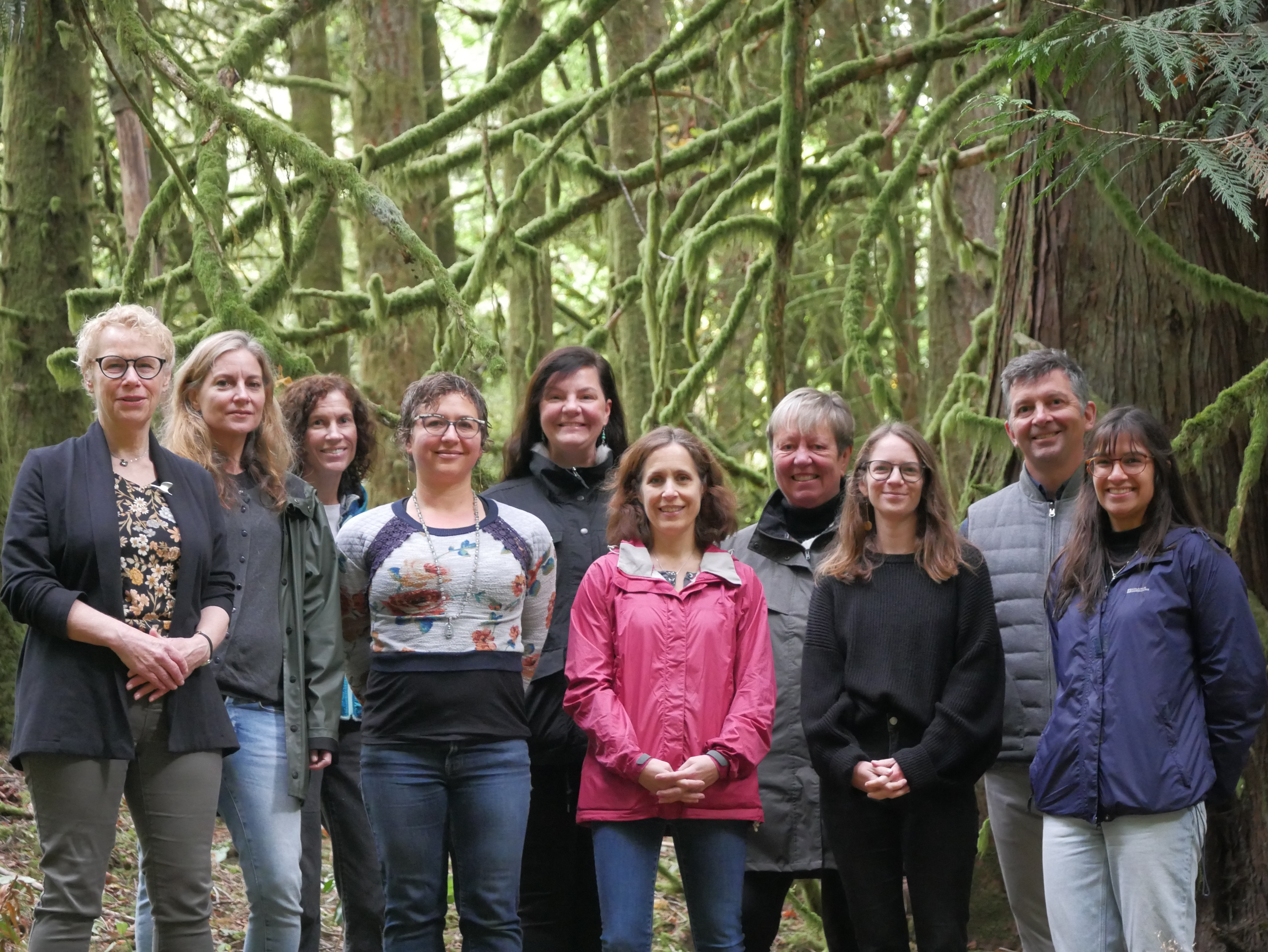
The team at Natural Assets Initiative (NAI) provides global leadership in bringing nature into municipal decision-making. Image credit: NAI
Conventional municipal asset management in Canada is focused on built assets, many of which are in urgent need of repair or adaptation to meet the needs of growing communities and a changing climate. Natural assets, such as wetlands, forests, and shorelines, are often overlooked, yet they are part of a critical green infrastructure and boost resilience, often at lower cost and with less risk than can be achieved with their engineered counterparts alone. Without a framework to understand and measure the value of natural assets, governments cannot effectively manage them in a sustainable and cost-effective way.
The non-profit Natural Assets Initiative (NAI) is a global leader in bringing nature into municipal decision-making, and has created what is now the most widely accepted framework for natural asset management (NAM) in Canada. Working alongside local governments and conservation authorities, NAI provides ecological and economic expertise to support the identification, valuation, and integration of natural assets into financial planning and asset management. Its approach, which supports low-cost, sustainable service delivery through natural infrastructure, is making NAM a mainstream, standardized practice across Canada.
NAM measures value through the services that natural assets provide, including water filtration and flood mitigation, carbon sequestration, and even recreational benefits that would otherwise require built infrastructure. The valuation process may also consider the cost to restore natural assets if they become depleted as a minimum baseline value. Non-market benefits, such as cultural significance, may need to be considered qualitatively – there are some things that do not have a price, and dollar figures do not represent nature’s intrinsic value.
The process of mapping, valuing, and managing natural assets often involves cross-departmental collaboration at the local level with engineers, accountants, and environmental staff. In addition to municipalities, NAI has also worked with several First Nations aiming to use natural asset inventories to inform their decision-making about infrastructure projects. Incorporating Indigenous perspectives and knowledge about natural assets can also contribute to other reconciliation efforts at the local level, as it involves recognizing and accounting for cultural values specific to the natural features of the area.
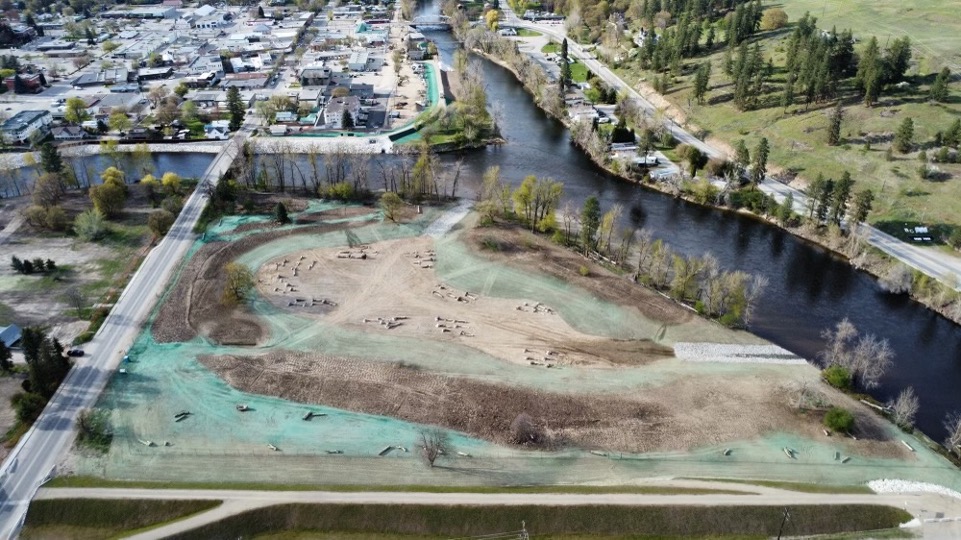
Natural asset management informed the Grand Forks, B.C., floodplain naturalization project of 2023/24. Image credit: City of Grand Forks
Many cities have institutionalized NAM results into municipal policy and take natural assets and natural infrastructure solutions into consideration when drafting community plans and climate adaptation strategies. For example, in Grand Forks, B.C., concerns about flooding prompted both the city and provincial governments to invest in extensive drainage and water management systems, restore natural defenses, and even relocate parts of the community out of the floodplain to reduce future risk. Ontario has integrated NAM into provincial regulation via O. Reg 588/17, which requires all 444 municipalities in the province to include green infrastructure in their asset management planning process.
Bringing an ecological perspective to the essential practice of asset management can ensure that natural assets are considered and maintained responsibly alongside built infrastructure. Natural asset management is a scalable approach that can be applied to land and infrastructure management across Canada. As communities grow and the climate changes, demands on the country’s infrastructure will increase, and the work of NAI will help to promote nature-based solutions to issues like erosion, flooding, and storm surges.