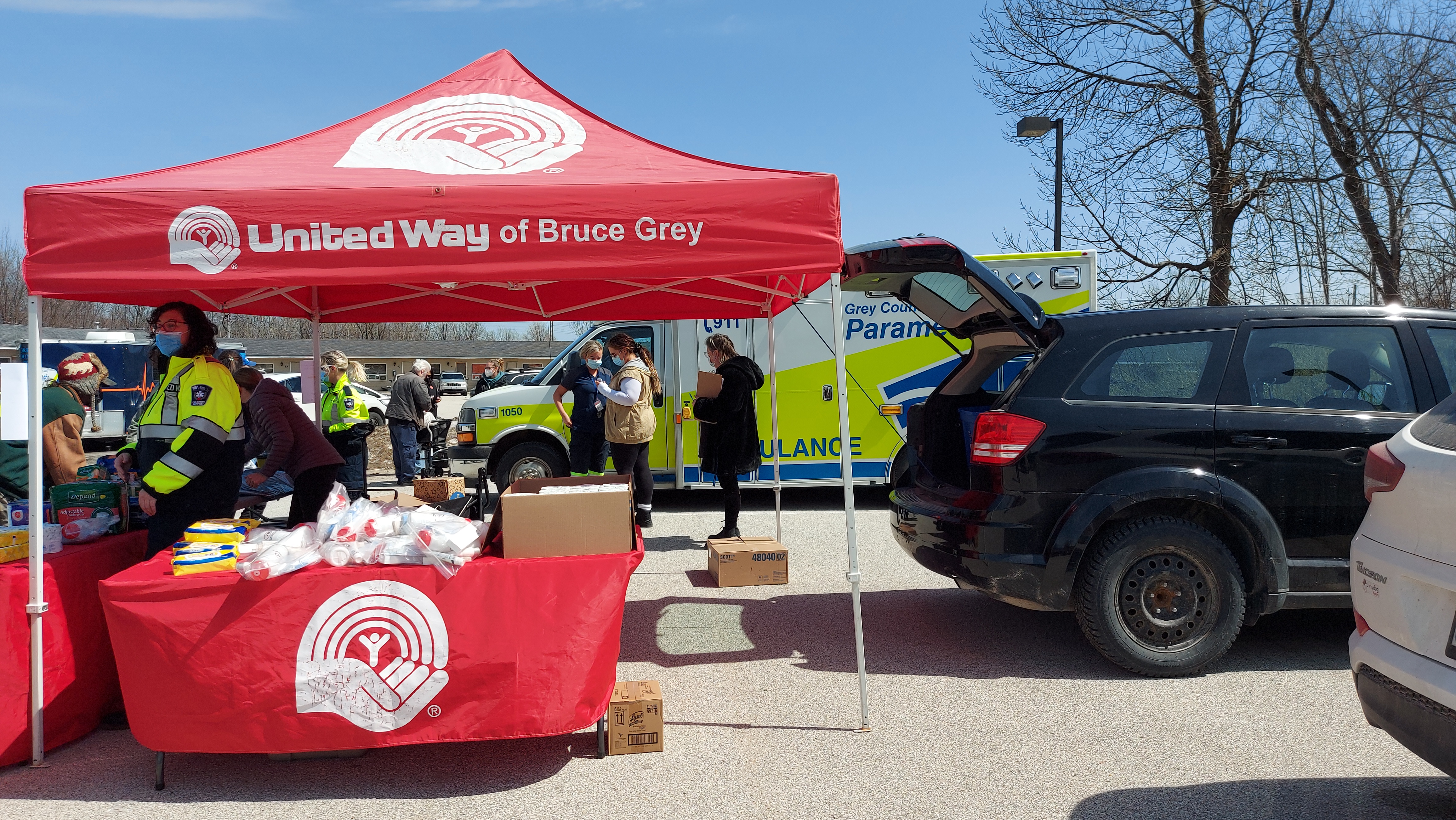
United Way of Bruce Grey brings a wide range of services and information into the community, hosting pop-ups at markets. Image credit: United Way of Bruce Grey
The small communities of Bruce and Grey Counties have been hit hard by Canada’s decades-long opioid epidemic. Opioid case and death rates soared during the COVID-19 pandemic and haven’t returned to pre-2020 levels. In response, a team of paramedics and community health workers has built a nimble, compassionate model for addictions-related health care in the community.
The Supportive Outreach Service (SOS) grew from a May 2021crisis in Hanover, Ontario, where a COVID-19 outbreak in a rooming house led to over 50 residents being quarantined, many with mental health and addictions issues and little in the way of personal support networks. For weeks, various local agencies collaborated to meet their needs on-site, asking few questions and providing health care as well as other necessities such as regular meals, hygiene supplies, counselling, and even shoes. The infected residents recovered – and the general health indicators of the group had improved significantly. Many entered addictions treatment programs.
Today, SOS responds to calls seven days a week across Bruce Grey with a similar “no wrong doors” approach – meaning that when someone seeks help through any point of contact, SOS prioritizes their immediate needs and connects them to a range of supports. SOS is led by Grey County Paramedics and the United Way of Bruce Grey, in partnership with the Canadian Mental Health Association – Grey Bruce and with Brightshores Health System. Its teams provide medical care, harm reduction equipment, vaccinations, crisis management, and supportive addictions treatment aligned with patient goals. In a region with no public intercommunity transit and few private bus carriers, SOS brings support to where patients are, through mobile clinics and home visits, rather than asking them to travel to facilities when in crisis.
SOS staff prioritize visibility in, and connection with, the community. Free Naloxone kits hang outside their office and are refilled as people take them. SOS holds bi-weekly pop-ups at markets in Owen Sound and Hanover to answer questions and provide Naloxone training. It works: most of Bruce Grey’s unhoused residents have heard of the service through word of mouth.
SOS relies on partnerships with public agencies and other organizations along the continuum of care, seeking to supplement, rather than duplicate, their work. It sets clear boundaries, asking police to give them a “wide berth” so clients can get support without fear of police presence. Local police services have confirmed that SOS’s work has reduced emergency call volumes.
Staff at SOS humanize patients as community members and tie their well-being to that of the community. One approach has been to highlight how harm reduction helps prevent disease transmission by mitigating risks like shared needles and unsafe supply. Another initiative offered grocery cards to community members who cleaned up needles from parks, creating visible improvements without punitive measures.
SOS is supported by the Ontario Health Team, community paramedic funds, micro-grants from Grey County, and United Way fundraising. In October 2025, federal funding allowed the service to expand mobile operations from four to seven days a week. Challenges remain: a lack of affordable housing makes patient progress hard to sustain. Provincial policies like closing safe consumption sites and reducing addiction treatment supports hinder harm reduction efforts. Even so, the success of SOS has led to other communities seeking to adapt the model, having demonstrated that health care that meets patients where they are is not only possible but necessary.