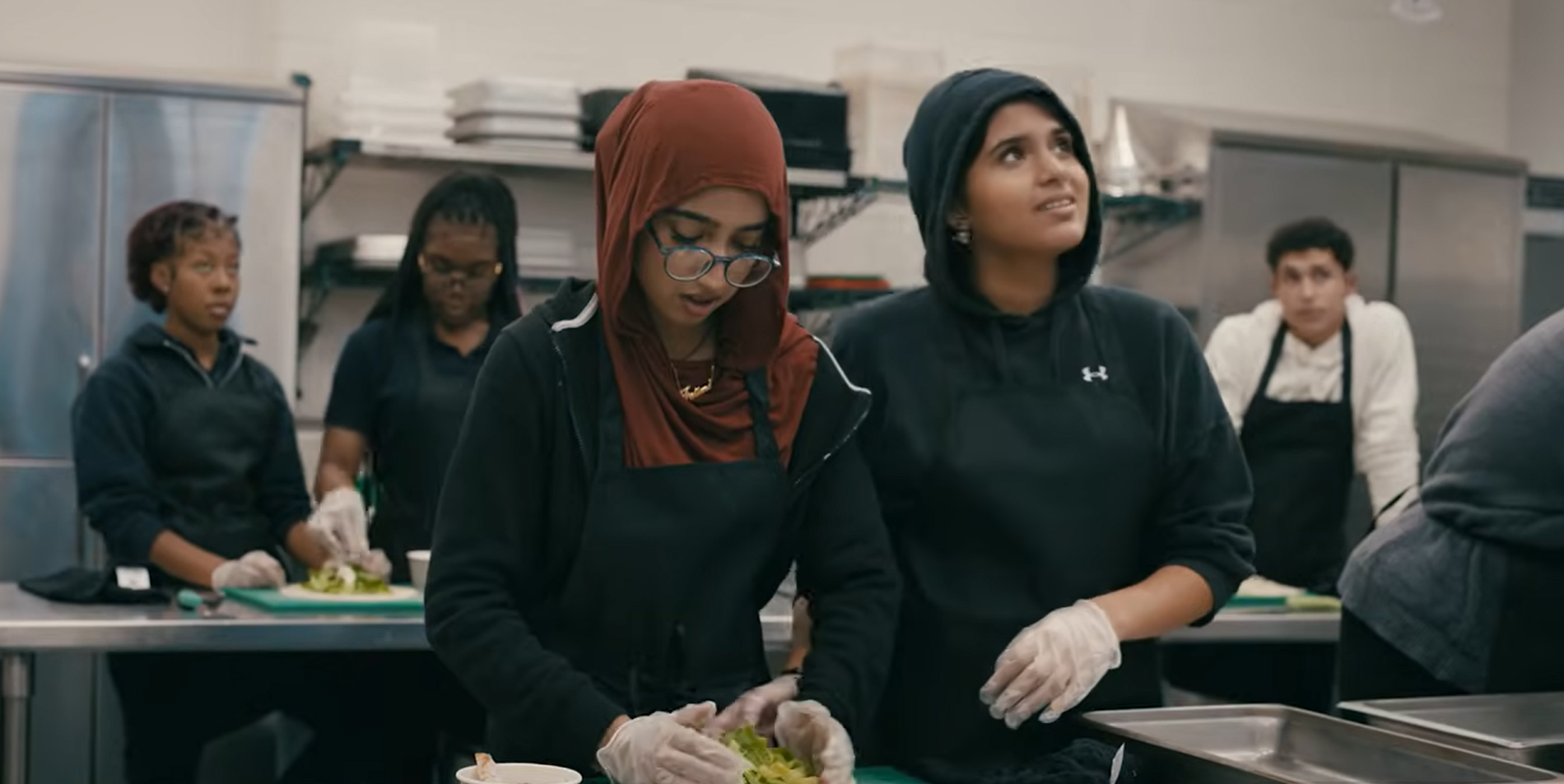
Cooking classes, coding, and dance performances are among the youth-driven programs on offer at the Malton Youth Hub. Photo credit: Malton Youth Hub Image credit: Malton Youth Hub
Young people need spaces in their neighborhoods where they feel safe, are heard, and can be themselves. In 2016, the City of Mississauga recognized that youth in Malton – an ethnically diverse and geographically isolated neighbourhood in the city’s northeast – lacked sufficient access to health and community services, as well as dedicated spaces for recreation and arts programming. In response, they created the Malton Youth Hub, a one-stop destination for the area’s youth. The Hub, a converted swimming pool, houses in its 18,000+ square feet of space a recording studio, a commercial kitchen, multipurpose rooms, and a spacious atrium space for casual meet-ups and performances on a pop-up stage. Since its opening in Fall 2023, the Hub has become a vibrant destination for Malton residents aged 12 to 25, who find there a place to access services, express themselves without judgment, learn, grow, and have fun.
The City prioritized listening to and working with youth throughout the planning and construction process – for example, it convened a youth advisory council to identify service gaps and provide feedback on the facility's design. This “for youth by youth” philosophy continues today at the Hub, where the on-site adult presence is limited. Some staff are recruited locally, creating connections between young people and the community. The Hub runs on a (free) membership model, which helps to create a sense of belonging among its users. Facility staff have deliberately fostered a culture of mutual respect, shared responsibility, and sense of care rather than enforcing formal rules. Members are encouraged to see the facility as their own and to contribute to maintaining it. This feeling of shared ownership has helped create an environment where youth feel comfortable experimenting, learning, and building connections with peers from different backgrounds and age groups.

The programming is also largely youth-directed: Hub staff work closely with members to develop and lead activities based on their own interests. The resulting programs have included coding, crocheting, cooking, and music – and the experience of contributing to them has allowed participants to build confidence, leadership, and public-speaking skills. The Hub also hosts various community services within its walls. Several anchor organizations, such as the Malton Black Development Association, Punjabi Community Health Services, and ResQ Youth International, provide a range of specialized services on-site, from medical and mental health supports to employment assistance to newcomer and legal services. A significant and growing nutrition program partners with community organizations to serve free halal meals and snacks (a total of 400 daily) on a need-blind basis.
The Malton Youth Hub was created through capital funding from the City of Mississauga and the Region of Peel, along with fundraising. All operational costs are covered by the City, supplemented by donations and in-kind partnerships. Three years after opening, the Hub has recorded over 250,000 visits and 4,033 unique visitors, from the Malton community and beyond (elsewhere in Mississauga, the nearby city of Brampton, and Toronto). Community feedback has been very positive, and local police have observed reductions in loitering and petty crime in the vicinity. The Hub’s supports have also enabled significant individual achievements for some of its members, with some returning to school and others pursuing post-secondary education. This success has prompted the municipality to establish a second youth facility along similar lines, the Glenforest Youth Hub, which is currently in the design phase.
By combining youth leadership, inclusive community spaces, and integrated services, the Malton Youth Hub demonstrates how social infrastructure can foster belonging among young people while also helping them build confidence in themselves and form connections in the community.
-Civic infrastructure works best when it is designed around a wider concept of belonging rather than a focus on programming alone. Giving young people genuine agency to participate from early stages to implementation fosters connection, ownership, and leadership. -Membership cards serve a dual purpose: they give young people a sense of ownership in the facility, and allow the staff to track engagement to make a strong case for continued funding. -The City’s role in managing and operating the facility raises the standard of program delivery. It ensures stable funding and dedicated staff, enables collaboration across departments and community partners, supports multi-year strategic planning, and signals a commitment to community development. -Location and design matter! The Hub’s site – next to a bus terminal, a school, and a community centre – allows easy access for youth within Malton and beyond. Co-locating integrated programs and services in this purpose-built facility makes it easier for youth to reach the services, programming, and spaces designed for (and by) them.