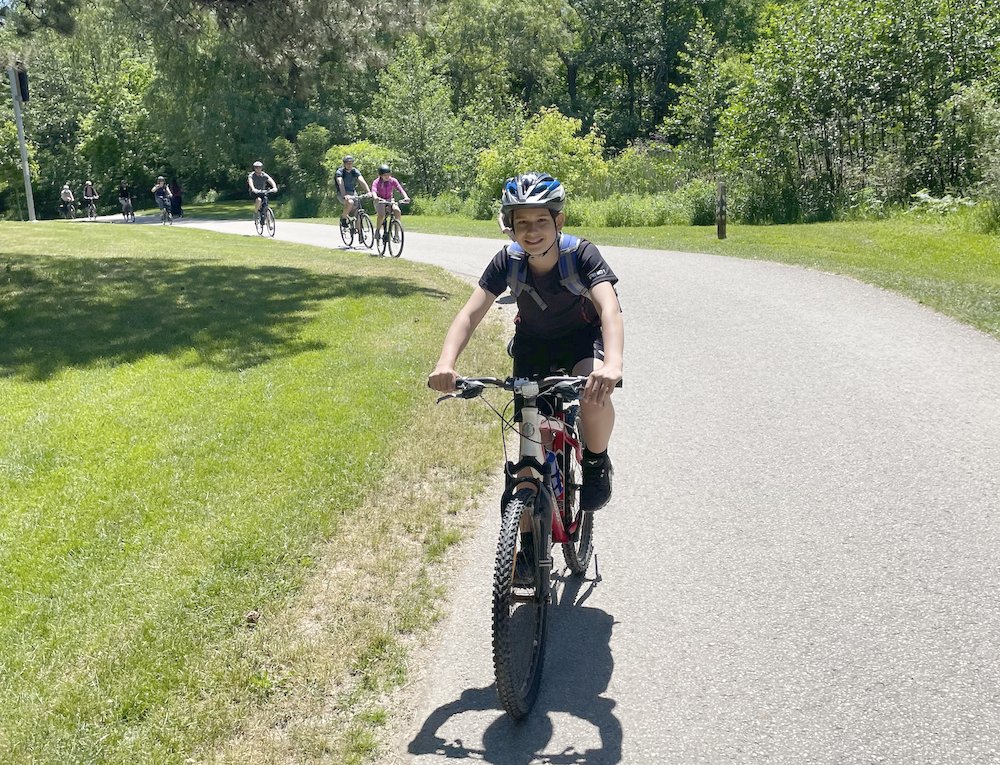
A bike bus makes its way toward a Toronto school. Image credit: Lanrick Bennett Jr.
Every morning during the school year, over 5 million Canadian students make the trip to class – and most of them, thanks to the combination of car-first street design and school policies, are dropped off by a parent in their car. This routine transforms the public spaces and streets surrounding schools across the country into places where collisions and injuries are more likely for everyone. Some communities, however, are exploring alternatives through bike bus programs, which organize and schedule times for children to bike to school alongside parent or teacher volunteers. A highly visible critical mass on the street, including a protective barrier of adults, discourages risky behaviour from drivers. Parents map routes, repair bikes on the way, and invite other families to join. Communities can also form walking buses for kids using walkers, wheelchairs, and other mobility devices. These encourage active transportation for vulnerable road users and foster a sense of community.
Bike buses typically operate weekly from the middle of September to the end of October, before resuming after March Break – although a warmer climate and cheaper equipment are making winter riding more feasible. Bike buses exist across Canada, including two in Toronto (in Davenport and Scarborough) established with the help of Toronto’s “Bicycle Mayor” alongside a coalition of biking groups, nonprofits, and parents. The programs needed minimal funding for basic supplies like safety vests and repair kits. But it was critical for them to have support from the wider community. Parents relied on principals to help coordinate with school staff and encourage students to join. The opposition that came from some quarters, such as parents who preferred driving directly to school and neighbours concerned about traffic impacts, was addressed with proactive empathy by emphasizing the goal of creating safe spaces for the community’s kids.
Goodwill and community champions are not enough to make these programs sustainable. Bike buses can lose momentum when supportive principals and teachers transfer to other schools or when parents disengage during school breaks. They need more volunteers to accompany them when cities lack permanent, safe bike infrastructure along routes to school. In Toronto, they are constrained by provincial efforts to remove bike lanes even as they are all the more necessary in light of broad policy targets for climate action and safe transportation.
Advocates point out that bike bus programs will have been truly successful when they are not needed, because the city streets are safe enough for cycling children as a matter of course. On the way to that goal, bike bus initiatives show how bicycling can become a normal, joyful part of growing up in Canada if we’re willing to let go of the wheel.
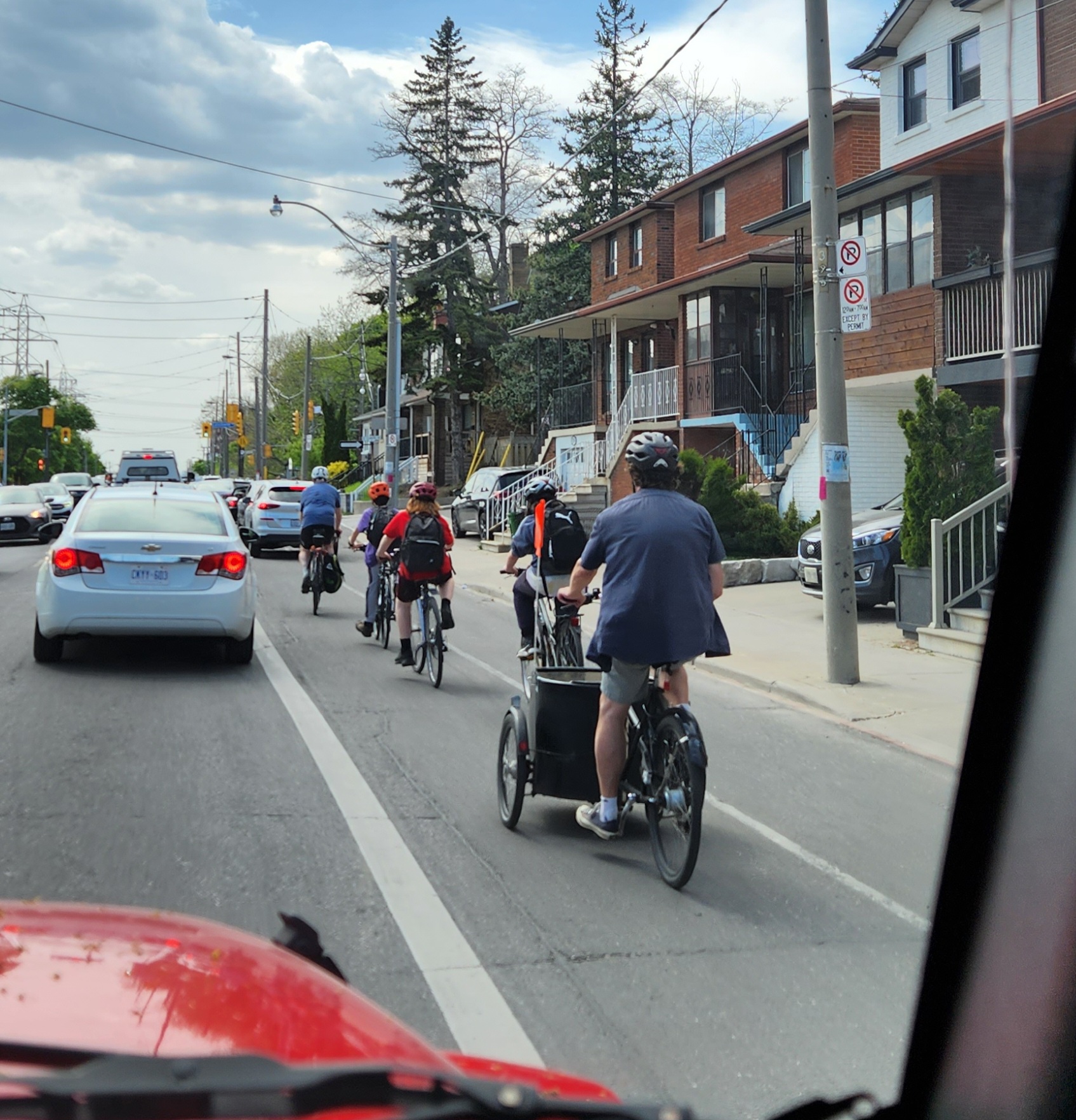
A Toronto bike bus in action on a busy street. The program required only minimal start-up funding, for supplies like safety vests and repair kits. Image credit: Lanrick Bennett Jr.