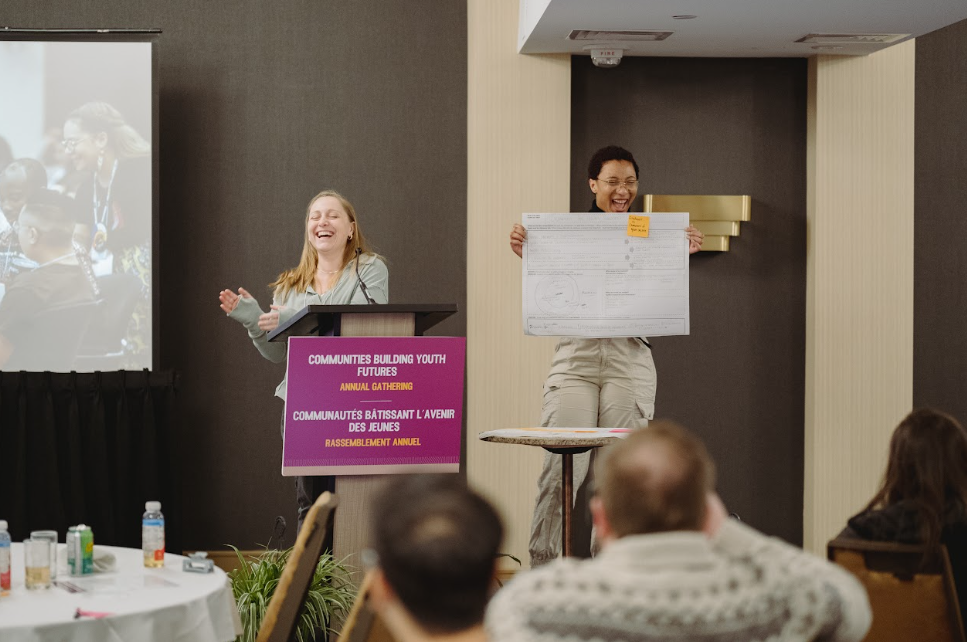
The CBYF annual gathering brings participants and leaders together for learning and inspiration. Image credit: The Tamarack Institute
Many young people across Canada face barriers to accessing education and employment, with results that can affect their long-term well-being, particularly in remote, rural, and Indigenous communities. The Tamarack Institute, an anti-poverty non-profit operating throughout Canada, sought to address these challenges through its Communities Building Youth Futures (CBYF) network. From 2019 to 2024, it developed a network and implemented programming in 20 communities across 11 provinces and territories, focusing on those that have a significant youth NEET population (people aged15–29 not in education, employment, or training).
At the core of this initiative was providing young people in these communities with opportunities to shape local youth-support strategies and initiatives themselves. Rather than giving convening responsibility to existing staff, CBYF compensated youth for taking on these roles, leading community engagement initiatives, and co-creating solutions with adults. The resulting community strategies went beyond traditional employment and educational programs to support young people holistically, including mental health, mentorship, community and cultural identity, and basic needs. Strategies included free after-school programming, drop-in spaces with employment resources, and summits for youth leaders. In Portage la Prairie, the community created a “Roving Campus” for students at risk of not completing high school: introducing alternative credits, providing lunches, and meeting students where they were after learning that unreliable transportation and food insecurity were major barriers. With support from the school board, the campus is now integrated into the local school system and expanding into another CBYF community (Digby, N.S.) with financial support from the Rideau Foundation.
Funding was provided by Employment and Social Development Canada (ESDC). Together with Tamarack, ESDC identified the first 12 CBYF communities based on their large NEET populations and the communities’ readiness to engage in youth-led collaborative change efforts. Tamarack acted as an intermediary between each community and the federal government, providing a backbone of funding, facilitation, and capacity building throughout the program. It also took on the administrative work of reporting, which allowed community organizations to focus on program implementation. Once each community had established priorities with Tamarack’s support, it applied for an annual one-year grant from ESDC to implement and scale its solutions, drawing on Tamarack’s extensive poverty reduction resources. CBYF’s multi-year funding enabled hiring at least one full-time employee in each community, mentored and supported by the CBYF program staff to build skills and experience.
Serious challenges remain. Among the 12% of Canadian youth who are NEET, roughly a quarter are caring for children, and over a third are looking for paid work. Indigenous youth are disproportionately represented. Youth barriers are reflected in adulthood disparities; for example, 42% of Indigenous adults have educational attainment at or below a postsecondary level, compared to 25% of non-Indigenous adults, a symptom of ongoing inequities. Ten years have passed since the Truth and Reconciliation Commission included “equitable access to jobs, training, and education opportunities” among 94 Calls to Action that largely remain unfulfilled.
Tamarack continues to facilitate a network that connects CBYF participants with one another, sharing success stories, new ideas, and opportunities for funding and youth employment. Youth often have ideas for how to address challenges in their own communities, but may lack the support and resources to make substantive change. Initiatives like CBYF model demonstrate ways to engage them not as subjects of policy, but as active agents with the knowledge and skills to shape it.